
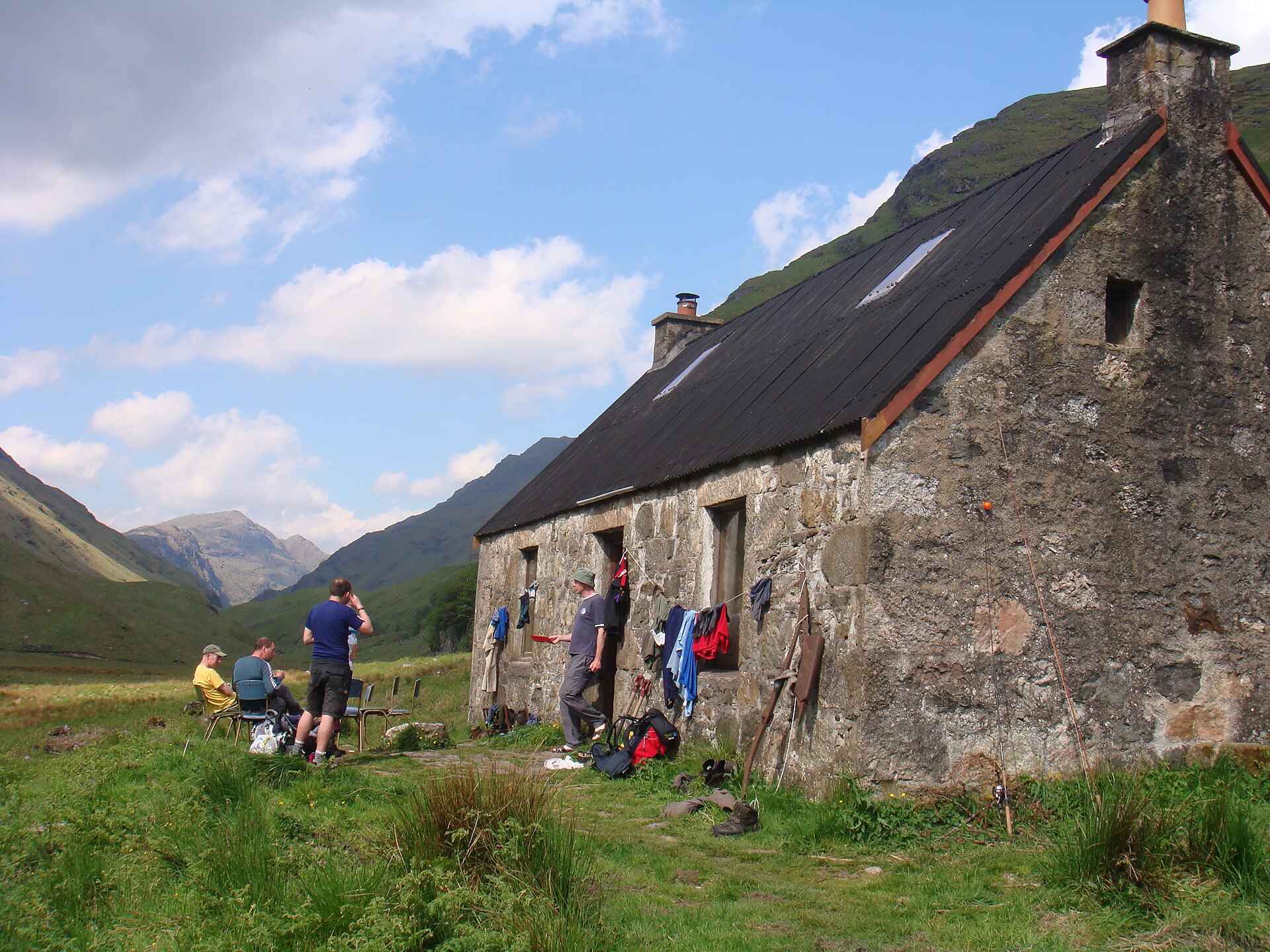
The Bothy Code is a short list of rules. It keeps free mountain shelters open for everyone. Read it before you go, because the bothy itself will not explain it to you.
- The code covers cleanliness, damage, waste, fuel, group size and local restrictions.
- Larger parties should not use a bothy without the owner’s permission.
- Bothies survive on goodwill and volunteer work, so your behaviour decides how long they stay open.
What is a bothy, and who runs it?
A bothy is a basic shelter. It is usually left unlocked and free for anyone to use. Most began as working buildings on remote estates. Gamekeepers, shepherds and farmers once lived in them.
Many of those buildings were abandoned as estates changed how they worked. Walkers later started sheltering in the empty shells. In 1965 a group of friends restored a building in Dumfries and Galloway. That project marks the start of the Mountain Bothies Association, or MBA.
The MBA now looks after around 100 bothies. Most are in Scotland. A handful are in England and Wales. The MBA does not usually own them. Landowners own the buildings and lease them to the association. Donations and volunteer work parties pay for the upkeep.
Not every open shelter belongs to the MBA. Other groups look after some. Others are known only to people who live nearby. Treat those places with the same care, and do not assume anyone is maintaining them for you.
What does the Bothy Code actually say?
It is a statement of how users are expected to behave. The main points are these:
- Use the bothy entirely at your own risk.
- Leave the place clean, and leave dry kindling ready for whoever comes next.
- Welcome other visitors.
- Tell whoever maintains the bothy if you find damage.
- Carry out any rubbish that will not burn.
- Do not leave perishable food, because it attracts vermin.
- Check the fire is out and the doors and windows are shut properly before you go.
- Never cut live wood or damage estate property.
- Use fuel sparingly.
- Bury human waste out of sight and well away from the water supply.
- Respect any restrictions on use.
Do not claim rules it does not contain. If a bothy has its own notice, follow it.
Why is group size limited?
Bothies are small. Some are little more than a large box. The code says they are meant for small groups on the move in the mountains.
Parties of six or more should not use a bothy. They should not camp near one either. The exception is when the owner has given permission first. Commercial groups cannot use bothies at all.
There is also a cultural rule. A bothy is never full, and you can always squeeze one more in. That does not mean you should plan on it. Plan to avoid busy bothies at peak times. Summer weekends and holiday weekends are the busiest.
Always carry a tent or bivvy bag. If the bothy is crowded, you can pitch outside. If you cannot find it in the dark or in mist, you still have shelter.
How do you leave a bothy better than you found it?
Think of the next person. They may arrive tired, cold and wet. Your job is to make that arrival easier.
Before you leave
- Sweep the floor and tidy the sleeping area.
- Leave dry kindling by the fire if there is one.
- Make sure the fire is fully out.
- Close doors and windows properly.
- Check you have taken all your belongings.
Rubbish and food
Rubbish is a serious threat to bothies. Take out everything you cannot burn. Do not bury it, because that pollutes the ground. If you find rubbish left by others, burn it or carry it out. Do not leave it for volunteers who are already stretched.
Do not leave perishable food. Mice and other vermin will find it. Sleeping bags, wet socks and bottles are not welcome gifts either.
Fuel and extras
Coal and candles left behind are meant to be used. Replace what you burn if you can, at that bothy or another. Never cut live wood. Never burn fence posts or anything else that is there to do a job.
Toilet
Most bothies have no toilet beyond a spade. The MBA advises walking at least a couple of hundred metres from the bothy. Stay 60 metres from the water supply. Never use the area around the building.
What happens when the code is ignored?
The system depends on trust. No warden checks you in. There is no booking and no fee. If you trust people to do the right thing, they normally will. That is the MBA’s own experience of the free-of-charge model.
The problems it does see come from heavy use. Sanitation is the main one. Rubbish is another. At very popular bothies it reaches crisis point in summer. Corrour Bothy in the Cairngorms is one example.
The MBA works with landowners, and the landowners own the buildings. Poor behaviour strains that relationship. The code also asks users to respect restrictions such as stag stalking or lambing time. Ignoring those puts access at risk.
The sources provided do not describe how often wardens visit or how they assess compliance. Maintenance is done by volunteers through work parties. The honest picture is simple. Bothies stay open because people look after them. Users who do not will eventually cost everyone the shelter.
If you enjoy a bothy, say thanks. You can donate to the MBA or join a work party. Signing the bothy book also helps, and it is often good reading.
Frequently asked questions
Is it legal to stay in a bothy for free?
Most bothies are free and open to everyone, with no booking. The owner’s permission is needed for an extended stay. The code says bothies are for short stays only.
Can I use a bothy with a group of friends?
Small groups are fine. Parties of six or more should not use a bothy or camp near one without the owner’s permission. Commercial groups cannot use bothies at all.
Can I light a fire in a bothy?
Many bothies have a fireplace, and coal and wood left there are meant to be used. Use fuel sparingly and never cut live wood. Make sure the fire is fully out before you leave.
What if the bothy is full when I arrive?
The tradition says a bothy is never full, but do not count on it. Carry a tent or bivvy bag so you can pitch outside. Avoid busy bothies at peak times such as summer weekends.
Related reading
- The Quiet Lake District: Valleys and Seasons Away from the Crowds
- Gritstone and Peat: Walking Kinder Scout, Stanage Edge and the Great Ridge
Sources
- How to use bothies (thebmc.co.uk, accessed 2026-11-09)
- Why a night in a bothy beats any hotel – and what you … (countryfile.com, accessed 2026-11-09)
- Bothy — Wikipédia (en.wikipedia.org, accessed 2026-11-09)
Photo: Glenpean Bothy (geograph 2266304), by Sally, CC BY-SA 2.0 (Wikimedia Commons)