
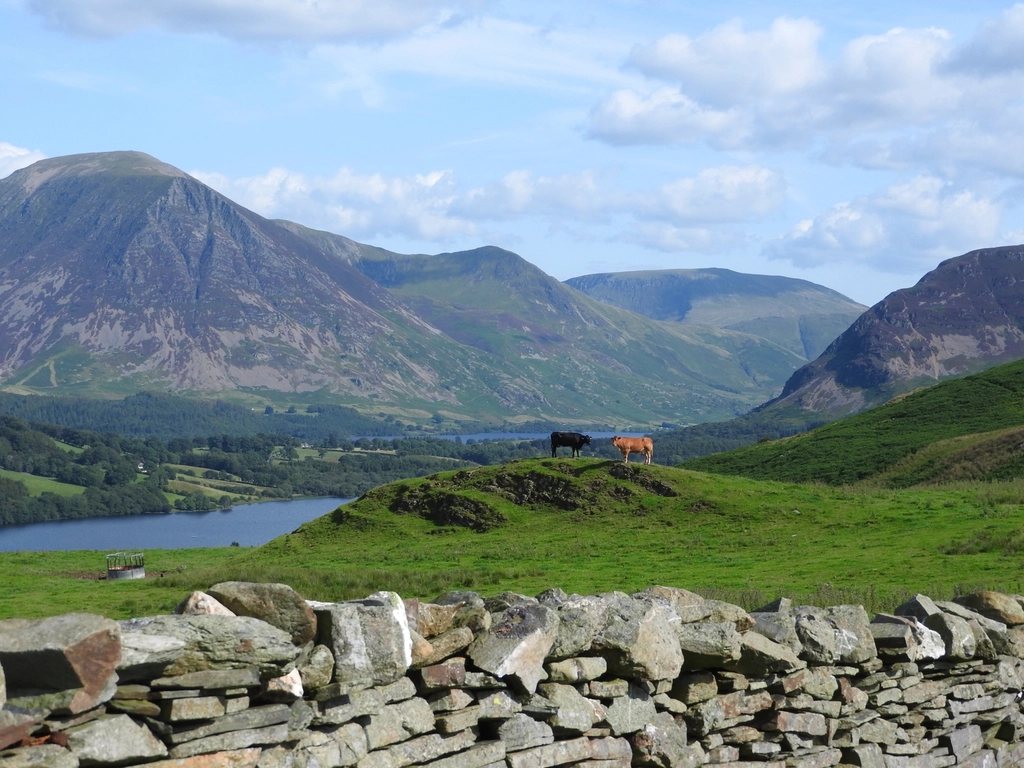
The Lake District receives around eighteen million visitors a year, and on a fine Saturday in August it can feel as if most of them are on Catbells. Yet the national park covers 2,362 square kilometres, and the crowds are concentrated in a few well-known places at a few predictable times. Step one valley sideways, or shift the calendar by a month, and the fells are as empty as they were a century ago. This is a guide to where and when.
Understanding where the people go
Visitor pressure in the Lakes follows the roads and the car parks. The central corridor from Windermere through Ambleside and Grasmere to Keswick carries most of the traffic, and the honeypot summits are those reached from it: Helvellyn by Striding Edge, Scafell Pike from Wasdale Head or Seathwaite, Catbells, Loughrigg, the Langdale Pikes and the Old Man of Coniston. Add the Fairfield Horseshoe and Blencathra by Sharp Edge and you have covered perhaps ninety per cent of the footfall on the high ground.
The corollary is that the rest of the district is quiet. Many of the western and eastern valleys have no through road, a single-track lane, or no road at all, and that alone keeps the numbers down. The fells above them are just as high, the views are often better because they include the Irish Sea or the Pennines, and the paths are grassy rather than pitched stone.
The western valleys: Ennerdale, Wasdale and Eskdale
Ennerdale is the only major Lakeland valley with no public road along it, and the forestry track that runs its length is closed to private vehicles. From the car park at Bowness Knott it is a walk of two hours to the head of the valley, and everything beyond feels remote in a way that nowhere on the eastern side can match. Pillar, at 892 metres, is the great mountain of Ennerdale, and its northern face, with Pillar Rock, is one of the finest sights in England. Steeple and Haycock along the southern ridge are rarely busy even in high summer.
Wasdale is famous for Scafell Pike, but the crowds walk straight up the corridor path and back. Turn instead to Yewbarrow, Red Pike or the long ridge of the Wasdale screes above Wast Water, the deepest lake in England at 79 metres, and you will meet almost nobody. Eskdale, to the south, has a narrow-gauge railway and a scatter of hamlets but no lake, so it draws fewer visitors. The walk up the Esk to Great Moss, beneath the crags of Scafell and Bowfell, is as wild as any ground in the district.
The far eastern fells: Haweswater, Longsleddale and Kentmere
East of the Kirkstone Pass the character changes. The fells are rounder, the valleys longer, and the roads end early. Haweswater is a reservoir, and the drowned village of Mardale Green beneath it appears when the water is low. From the road end at Mardale Head, High Street rises to 828 metres along a Roman road that once carried legions between the forts at Ambleside and Brougham; the horseshoe over Harter Fell and Kidsty Pike is a full day with the lake below for most of it.
Longsleddale and Kentmere are two parallel valleys with a single narrow lane each and almost no parking, which is exactly why they are quiet. The Kentmere Horseshoe covers eight summits over 20 kilometres, and the walk up Longsleddale to the Gatescarth Pass is a way into Haweswater that few people know. Swindale, further north, has no shop, no cafe and no obvious reason to visit, and is one of the most beautiful small valleys in the country.
Back o’ Skiddaw and the northern fells
Skiddaw itself, at 931 metres, is well trodden from Keswick, but the fells behind it form the emptiest upland in the Lake District. The ground between Skiddaw and Carrock Fell is smooth, grassy and almost pathless in places, and the valleys of Dash and Mosedale end in bothies rather than car parks. The Caldbeck fells to the north drop gently towards the Solway plain, and from High Pike the view is of Scotland rather than the Lakes. In an area that otherwise shows its scars, this is a landscape where you can walk for a whole day and see only sheep.
Seasons: the calendar is your best tool
Where you go matters, but when you go matters as much. The busy months are July and August and the school holidays around Easter and the late May bank holiday. Outside those windows the district thins dramatically.
- Late April to mid May: long days, cold clear air, lambs in the fields and few people. Snow may linger on the high tops.
- Mid September to late October: the bracken turns, the light comes low across the lakes, and the crowds leave with the school term. Our favourite season.
- November to February: short days and wet weather, but a settled cold spell brings frozen tarns, snow on the fells and near-total solitude. Winter skills and equipment are needed above the valley floor.
- Weekdays over weekends, always. A Tuesday on Helvellyn in June can be quieter than a Sunday on Loweswater in February.
- Early starts. Most walkers leave car parks between nine and eleven; a seven o’clock start gives two hours of empty hill even on the popular routes.
Practical notes for the quiet valleys
Remoteness has costs. Mobile signal is patchy or absent in Ennerdale, Wasdale and the far eastern valleys, and rescue teams take longer to arrive. Roads over Hardknott and Wrynose passes have gradients of one in three and are closed by ice in winter. Parking is scarce, so arrive early or use the seasonal buses where they run. Shops are few and close early, and fuel stations are far apart. None of this is a reason to stay away; it is simply the price of having a national park almost to yourself, and we consider it a bargain.
Read next: Scafell Pike and Striding Edge: Planning Both Lake District Days