
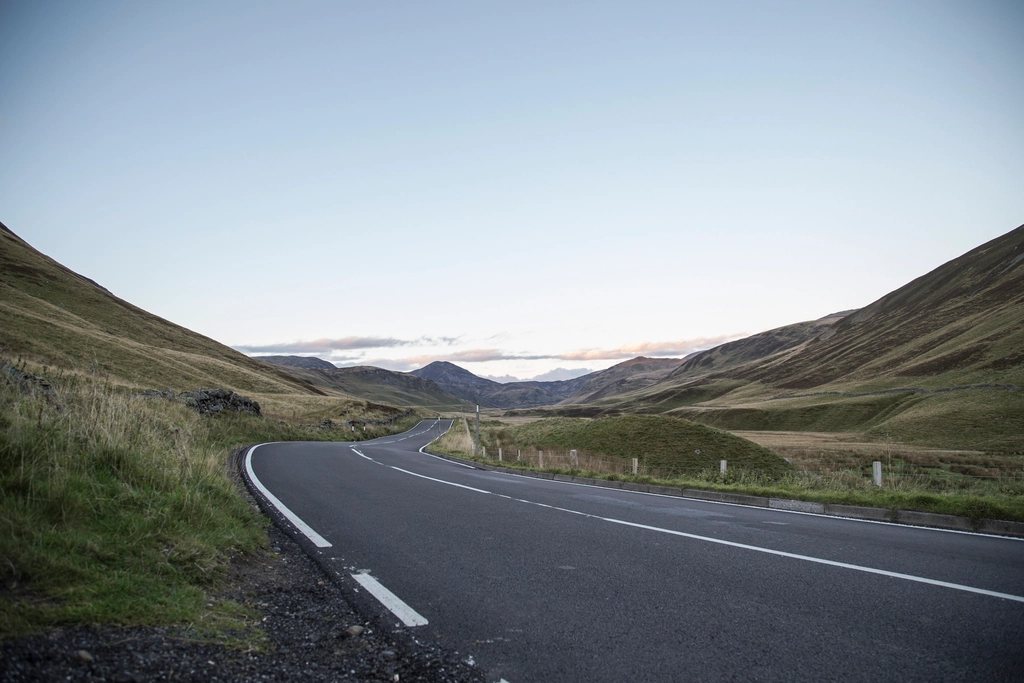
The car has become so much a part of British hillwalking that we forget how recent the habit is. The rambling boom of the 1930s was built on cheap rail fares and a Sunday bus from the mill towns, and a surprising amount of that network survives. Plan around it and a walk changes shape: you no longer need to return to where you started, you can finish in a different valley, and you can leave the driving, the parking charges and the full lay-by to somebody else. This is a practical guide to doing it well.
Why linear walks are the real prize
The single greatest gift of public transport is the linear route. Most of the finest lines in Britain run from one valley to the next rather than in a loop: a pass crossed, a ridge followed end to end, a coast walked in one direction. With a car parked at the start, all of these become out-and-back or awkward circuits. With a station or bus stop at each end, they become the natural thing to do. We have crossed the Lake District from Windermere to Keswick over two days, walked the length of the Great Ridge from Edale to Hope, and traversed the Cairngorms from Aviemore to Braemar through the Lairig Ghru, all without once thinking about where a vehicle was waiting.
The trade-off is timing. A bus that runs every two hours dictates when you leave the summit, and a last train missed can mean a long night. We treat the timetable as part of the route plan, with the same seriousness as the weather forecast, and we always build a margin of at least an hour into the descent.
The railway lines that matter to walkers
A handful of lines carry most of the useful stations. The Hope Valley line between Sheffield and Manchester stops at Edale, Hope, Bamford, Hathersage and Grindleford, which puts Kinder Scout, Mam Tor, Stanage Edge and the Derwent edges within a few minutes of the platform. The Settle to Carlisle line serves Horton-in-Ribblesdale, Ribblehead, Dent and Garsdale, so the Yorkshire Three Peaks and the high Dales are entirely possible without a car; Dent station, at 350 metres, is the highest mainline station in England and sits four miles from the village it is named after.
In the Lake District the branch line ends at Windermere, from where buses continue to Ambleside, Grasmere and Keswick. Penrith, on the west coast main line, has a regular bus to Keswick and Ullswater. In Wales the Conwy Valley line runs from Llandudno Junction to Betws-y-Coed and Blaenau Ffestiniog, and the Cambrian coast line gives access to Cadair Idris from Barmouth and Dolgellau. In Scotland the West Highland line is a walkers’ railway in its own right: Bridge of Orchy, Rannoch and Corrour, the last of which has no public road and stands at 408 metres, the highest station in Britain.
Buses: the local knowledge that makes the difference
Trains get you to the edge of the hills; buses get you into them. Seasonal services in the national parks are the ones to learn. In summer a bus climbs from Keswick over Honister Pass to Buttermere, another loops around Snowdon linking Llanberis, Pen-y-Pass, Nant Gwynant and Beddgelert, and a Peak District service runs along the Snake Pass road between Sheffield and Glossop, dropping walkers at the foot of Bleaklow. In the Dales, buses connect the Settle line stations with Malham, Kettlewell and Hawes on certain days of the week.
The essential facts to check are the days of operation, the last departure, and whether the service runs at all outside the summer season. Many rural routes shrink to a few journeys on Sundays and vanish altogether in winter. We keep a photograph of the printed timetable on the phone rather than relying on signal at the stop, and we carry the number of a local taxi firm as a last resort, without assuming one will be free.
Tickets, fares and the long journey north
Fares in Britain reward planning and punish spontaneity. Advance tickets bought weeks ahead for a fixed train are usually a fraction of the walk-up price; flexible tickets cost more but let you catch an earlier train if the weather turns. Several regions sell rover or ranger passes that cover unlimited travel on trains and local buses for a day or a week, and these often work out cheaper than two singles once you are moving around a national park. A railcard, for anyone eligible, pays for itself in one long trip.
For the Highlands, the overnight sleeper from London to Fort William, Inverness or Aberdeen deserves a mention. Falling asleep in the south and waking beside Rannoch Moor is one of the great pleasures of British travel, and it turns a full day of driving into a night you would have spent anyway. Booking well in advance is essential in summer.
Packing and luggage without a boot to fall back on
Without a car there is no second bag to leave behind, so everything has to be carried from platform to summit to bed. We pack for a week in a single rucksack of 35 to 45 litres and wash clothes in the sink. Boots go on the feet from the first morning, not in the bag. Poles collapse and strap to the outside. A small dry bag holds the tickets, the phone and a paper timetable in one place.
- Choose a base with a station or a bus stop within walking distance, and check the last connection before you book.
- Plan one linear day for each pair of stops you can join, then fill in circuits from the base.
- Carry a head torch on every walk, since a late bus is the most common reason for finishing in the dark.
- Learn the bus numbers and the names of the stops, which are rarely the same as the names on the map.
- Keep a bad-weather alternative that starts and finishes at the same station, so a wet day still gives a walk.
A sample week that works
Arrive by train at Penrith and take the bus to Patterdale. Day one: Helvellyn by Striding Edge, returning by Swirral Edge to Glenridding. Day two: over the Kirkstone Pass on foot to Ambleside, with the bus back if legs object. Day three: bus to Keswick and a linear walk over Catbells and along Derwentwater, using the launch or the bus to return. Day four: bus to Seatoller and the crossing of Honister to Buttermere, back on the seasonal service. Day five: Skiddaw from Keswick, straight from the town, no transport needed at all. Then the bus to Penrith and the train home. Not a mile driven, five different valleys walked, and every evening spent within reach of a real meal. That is the case for leaving the keys at home.